🌆 The DFW Conurbation
Why the Landlords Winning in North Texas Aren't Chasing New Development — They're Buying What Can't Be Rebuilt

Most American cities make sense on a map.
One downtown. A ring of suburbs. Maybe a secondary node or two. The classic hub-and-spoke, everything radiating outward from a single center, weakening as it goes.
Dallas–Fort Worth doesn’t work that way. It never has.
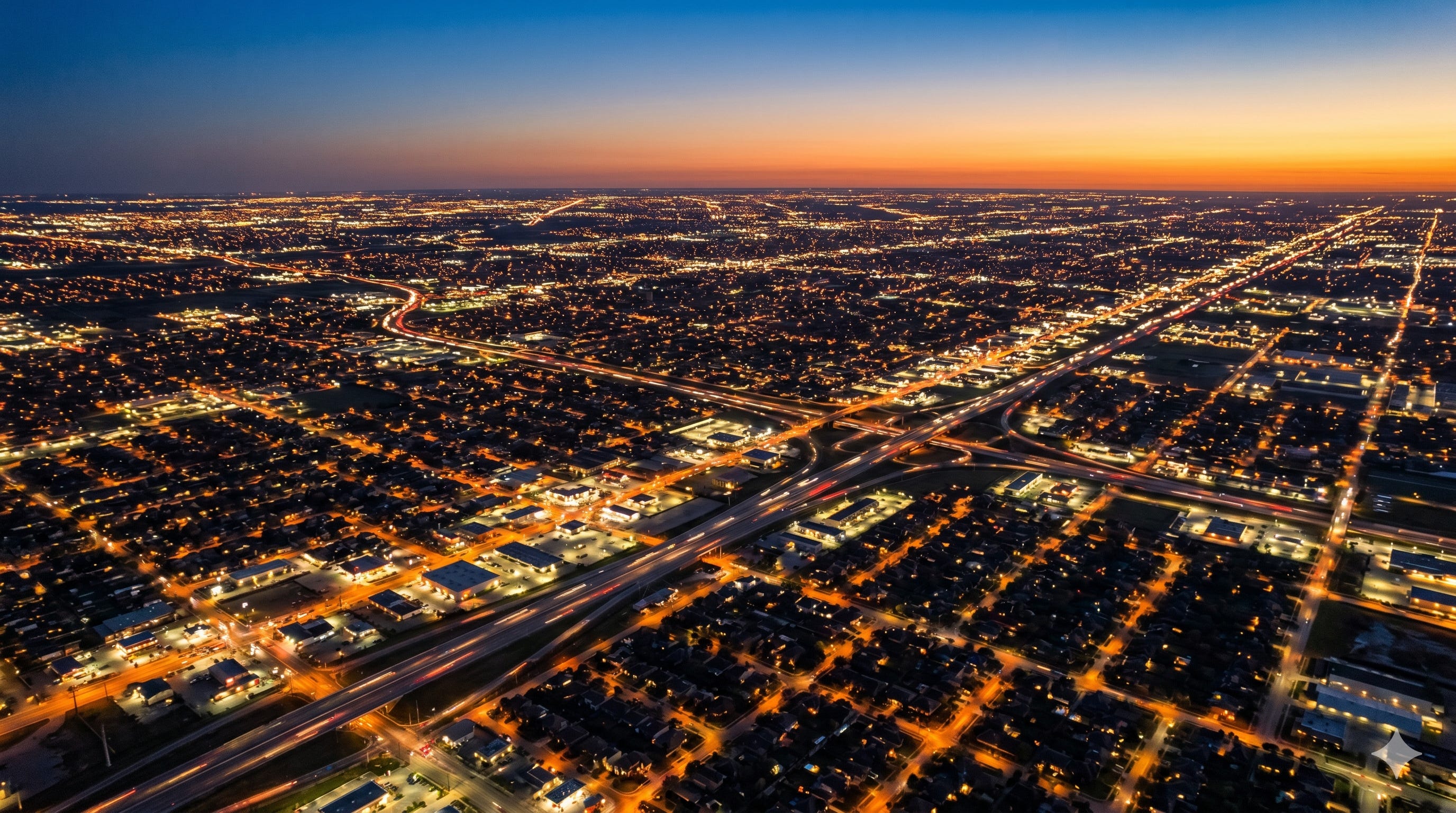
What you’re looking at when you study the DFW metro isn’t a city with suburbs. It’s something geographers have a specific word for, a conurbation: a continuous economic mass formed when separate, independent cities grow so relentlessly toward each other that their edges blur into a single functioning unit.
The Ruhr Valley in Germany. The Dutch Randstad. These are conurbations. Multiple powerful cities, no single center, generating economic output that no one of them could produce alone.
DFW is the premier American example, and here’s what makes it genuinely unique: most U.S. conurbations span multiple states. The Northeast Corridor runs from Massachusetts to Virginia. The Great Lakes region bleeds across state lines. DFW does it entirely within Texas, with two anchor cities both above one million people, Dallas at roughly 1.3 million, Fort Worth crossing 1.03 million — operating inside the broader Texas Triangle, a regional economy approaching $2.2 trillion in GDP. Two cities. One state. One continuous economic engine.
That framing matters for investors. It means the regulatory environment, the tax structure, the infrastructure planning, and the political will are all unified in a way that multi-state conurbations simply are not. There is no jurisdictional friction slowing this thing down.
Understanding that changes everything about how you invest in it.
🗺️ Do the County Lines Even Matter Anymore?
Here’s a question worth sitting with: for this conurbation to function, do the administrative lines between Tarrant, Dallas, Denton, and Collin counties need to blur?
The short answer is no, because the market already blurred them years ago.
A logistics company in Grand Prairie doesn’t think about county lines. A surgical group expanding from Southlake into Frisco isn’t crossing a meaningful border. A financial firm moving its back-office operations to Allen isn’t changing economies. Workers, supply chains, and capital flows don’t care about the boundary between Dallas County and Collin County. They care about drive times, access to labor, and proximity to customers.
The economic pressure of 8 million people moving, working, spending, and building inside a single continuous metro has rendered administrative boundaries economically invisible.
This isn’t a growth market. It’s a continental economy that happens to have county seats.
💼 “Y’all Street” vs. The Economy That Actually Pays Your Rent
You’ve read the headlines. Goldman Sachs in Dallas. Charles Schwab in Westlake. Toyota in Plano. The financial media loves calling it “Y’all Street”, the steady migration of corporate America to the Texas Triangle.
And it’s real. The Fortune 500 relocations are real. The campus announcements are real.
But here’s what the headlines skip: those campuses serve their employees well inside the perimeter, and create enormous demand just outside it.
Yes, the premier corporate headquarters being built today include on-site gyms, cafeterias, and even medical clinics. Companies compete for talent partly by making their campuses destinations in themselves. But no corporate campus, not even the best ones, fully replaces the neighborhood. The employee who uses the on-site gym at 7am still wants a boutique studio on Saturday morning. The one who grabs lunch in the cafeteria on Tuesday still wants the taco spot near her apartment on Thursday night. The family that uses the company’s telehealth benefit still needs a pediatric urgent care within three miles of home.
Corporate campuses concentrate spending on campus. But they concentrate people in surrounding neighborhoods, and those people have lives, families, and routines that play out in the retail fabric around where they live, not where they work.
That’s the economy your strip center serves. And right now, that economy is running at full throttle.
Retail occupancy across the Metroplex has hit a historic 95.3%. Average asking rents jumped 16.8% quarter-over-quarter at the close of 2025. Of the 7.4 million square feet currently under construction, 82% is already pre-leased before a single ribbon is cut.
This is not a speculative boom. This is essential-services infrastructure getting competed over in a market that simply cannot build fast enough to meet demand.
Which raises the most important question a small landlord can ask right now.
🏗️ If You Can’t Build It, What Is the Existing Asset Worth?
Pull back the curtain on why new supply can’t keep pace and you find a simple, structural problem.
In mature infill markets - Irving, Arlington, Grand Prairie, the HEB corridor - the math on new construction doesn’t work. Land values have run up sharply. Construction labor and materials costs remain elevated. Financing costs are high. By the time a developer acquires a site, entitles it, builds it, and leases it up, the per-square-foot cost of delivering new small-bay flex or neighborhood service retail in these locations has become nearly impossible to pencil at market rents.
So developers don’t build there. They push to the fringe, where land is cheaper, and leave the infill inventory largely alone.
That dynamic creates something extremely valuable for the owner of an existing infill asset: a structural moat built on replacement cost.
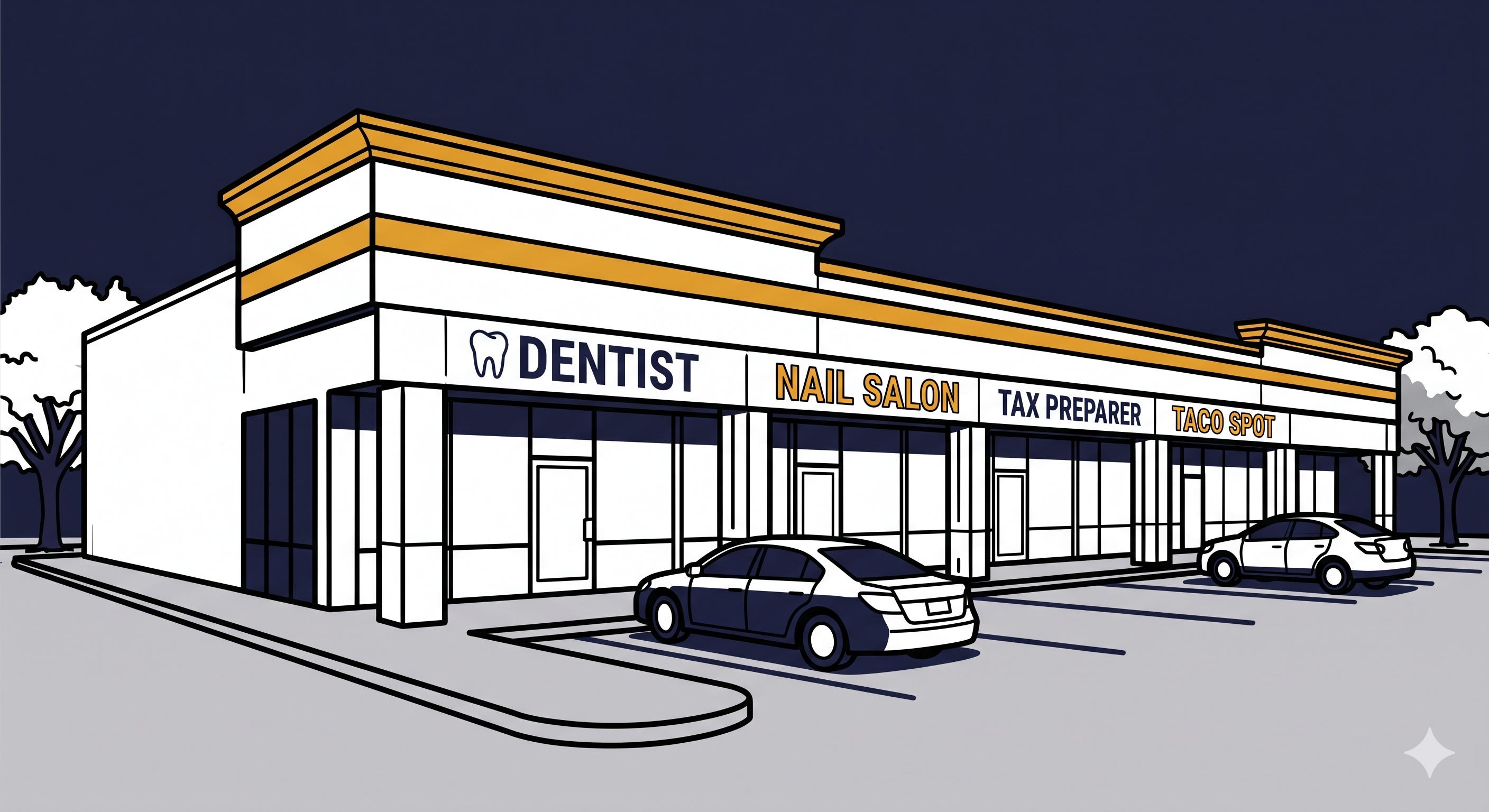
If it costs $280 per square foot to build new and you’re buying existing at $180 per square foot, the economics of new supply competing against your asset are essentially zero. Nobody builds the 12,000 square foot service retail strip next to yours when the numbers don’t work. Your tenants have nowhere else to go at anything close to your rents. And the demand driving those tenants isn’t going anywhere.
The infill landlord’s moat isn’t location alone. It’s irreplaceability.
This is a fundamentally different investment thesis than chasing greenfield development on the outer edge of the metro. Fringe land plays require you to be right about timing, infrastructure, and absorption, three variables that are hard to predict. Infill replacement-cost plays require you to be right about one thing: that the conurbation keeps growing. In DFW, that is the closest thing to a certain bet that exists in commercial real estate today.
📍 Where This Plays Out: The Infill Submarkets Worth Watching
The most compelling opportunities aren’t in the glossy new corridors getting all the press. They’re in the unglamorous, fully occupied, slightly tired infill markets that nobody writes feature stories about.
Irving and Las Colinas. Surrounded by DFW Airport, major employment centers, and established residential density on all sides. No room to build outward. Existing small-bay flex and service retail trades at a fraction of replacement cost.
Arlington and Grand Prairie. The geographic center of the conurbation, with a dense, employed workforce that is underserved by quality neighborhood retail. Both markets are seeing rent growth the construction pipeline cannot absorb.
The HEB Corridor (Hurst, Euless, Bedford). Chronically overlooked, fully occupied, sitting at the intersection of two major employment corridors. Infill retail here is about as close to irreplaceable as it gets in the Metroplex.
What these submarkets share: no meaningful new supply coming, sustained tenant demand from essential services, and existing asset prices that still reflect yesterday’s rent expectations rather than today’s occupancy reality.
That gap between expectation and reality is where the opportunity lives.
🔮 The CRE Investor’s Verdict
Here is what the conurbation framework tells you that a standard submarket report won’t.
In a true conurbation, growth doesn’t stop at the edge of one city and restart somewhere else. It compounds continuously across the entire mass. Every new corporate campus in Frisco creates new residents in Prosper who need a dentist in Little Elm. Every semiconductor plant near Sherman generates demand for service retail in McKinney. The economic activity flows through the entire system, and the infill infrastructure sitting in the core of that system is what keeps the whole thing breathing.
The private investor buying existing infill assets at or below replacement cost in mature DFW submarkets isn’t making a speculative bet on future growth. They’re collecting the downstream revenue of an economic continent that is already fully operational.
The conurbation doesn’t need your investment thesis to be right. It just needs to keep running.
And it will.
Enjoying NTX CRE Insider? Subscribe for weekly insights into the deals, developments, and decision-makers shaping North Texas commercial real estate. Join the community of investors, brokers, and builders driving the next Texas boom.